The British Food System in a Bowl
How Breakfast Cereal Became the Single Most Destructive Convergence Point in the British Diet
National Health Restoration Series — Article 8
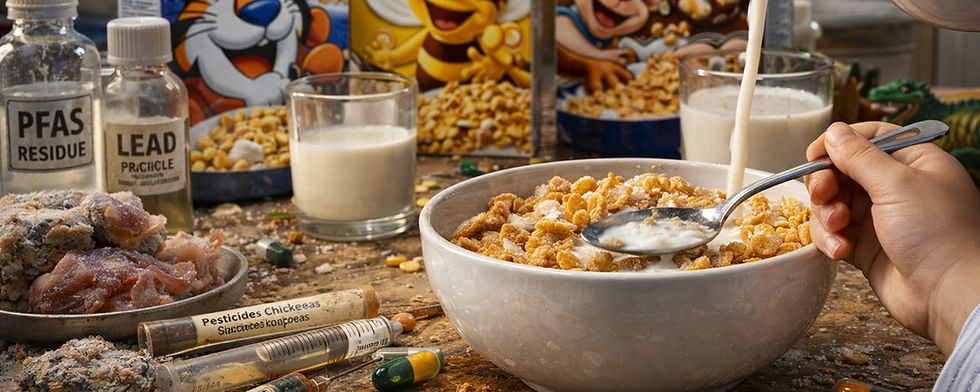
Every morning, in roughly eight million British households, a ritual takes place that most parents consider wholesome and most children consider normal. A child fills a bowl with processed cereal, pours on milk and eats. The entire sequence takes less than five minutes. In that time, a child may consume more sugar than is found in a chocolate biscuit [5,6], grain that has been stripped of virtually all natural nutrition by industrial extrusion [14,15], milk from cattle fed on pesticide-treated grain, and water containing traces of lead, PFAS, microplastics and pharmaceutical residues. The cereal itself may carry residues of glyphosate, chlormequat and pirimiphos-methyl [10,11,13]. It will almost certainly contain acrylamide, a probable carcinogen formed during high-temperature processing [22]. And every element of this meal will have been marketed to the child, not the parent, through decades of cartoon mascots, toy promotions and psychological targeting so sophisticated it would be regulated out of existence in Chile, Mexico or Scandinavia [25,27].
This is not a single product failure. It is the convergence point of every systemic failure this series has documented: ultra-processed grain, contaminated water, industrialised milk, pesticide residues, excessive sugar and relentless advertising aimed at the people least equipped to resist it. A bowl of cereal is the British food system in miniature.
In England, 22.1 per cent of children in Year 6 are now classified as obese [1,2]. In the most deprived areas, that figure approaches 30 per cent [1,4]. Tooth decay remains the leading cause of elective hospital admission for children, with nearly 90 per cent of extractions in young children attributable to sugar, costing the NHS approximately £33 million per year in hospital admissions alone [8,9]. Type 2 diabetes, once so exclusively an adult condition it was literally called "adult-onset diabetes," is now diagnosed in children and adolescents at rates that would have been unthinkable a generation ago [3].
Breakfast cereal is not the sole cause of this crisis. But it is its most concentrated expression, its most emblematic product and its most protected industry. This article examines what is actually in the bowl.
Part One: The Extrusion Process
The story of breakfast cereal begins, improbably, with a health mission. In the late nineteenth century, Dr John Harvey Kellogg, a Seventh-day Adventist physician running the Battle Creek Sanitarium in Michigan, developed grain-based foods as part of a regime he believed would promote digestive health and moral temperance. His brother, Will Keith Kellogg, recognised the commercial potential and founded the Kellogg Company in 1906. The original intent was to replace the heavy, meat-laden Victorian breakfast with something lighter and more nourishing.
What followed was one of the most complete betrayals of a founding principle in the history of food manufacturing. Within decades, breakfast cereal had transformed from a health product into a sugar-delivery mechanism packaged in a health claim, manufactured through a process that would render the original Kellogg brothers unrecognisable to their own invention.
The process is called extrusion. Virtually all boxed breakfast cereals, from Coco Pops to Weetabix Minis, from Cheerios to the organic granola clusters sold in health food shops, are manufactured using some form of extrusion cooking [18]. The raw ingredients, typically a slurry of grain flour, sugar, water and flavourings, are fed into an extruder: a machine that subjects them to extreme temperature (often exceeding 150°C and sometimes reaching 200°C), extreme pressure and intense mechanical shear force [14,15]. The mixture is forced through a die that determines the shape of the final product. A blade slices each piece as it emerges, and the pieces are then sprayed with a coating of oil and sugar to maintain crunch and prevent the cereal from immediately dissolving in milk [19].
This process is efficient. It is continuous, fast and cheap. It transforms a penny's worth of grain into a product that retails for several pounds per box, yielding profit margins that few other food categories can match [19]. It is also nutritionally devastating.
Peer-reviewed research has documented that extrusion cooking partially destroys heat-sensitive vitamins including vitamin A, the B-group vitamins, vitamin C and vitamin E [14,15]. Retention rates for B vitamins in long-barrel extruders can fall as low as 20 per cent [14]. The essential amino acid lysine is particularly vulnerable to denaturation through Maillard reactions, which occur when proteins react with sugars under high heat [17]. The process gelatinises starch, increasing the glycaemic index of the final product and creating a food more likely to cause rapid blood sugar spikes [18]. Carotenoids and other bioactive compounds with antioxidant properties are degraded [15]. Protein structures are fundamentally altered [14,17].
The scientific literature on extrusion is extensive but almost entirely focused on optimising process parameters for texture, shelf life and cost efficiency [15,16]. Studies examining the health consequences of consuming extruded grain, as opposed to whole or minimally processed grain, are conspicuously absent from major peer-reviewed journals. The cereal industry funds enormous quantities of research into breakfast and cognitive performance, breakfast and weight management, breakfast and nutrient intake. It funds almost nothing into what extrusion does to the nutritional value of the product it sells.
Two frequently cited but unpublished studies provide a disturbing counterpoint. The first, described by Paul Stitt in his book Fighting the Food Giants, involved four groups of rats maintained by a cereal company [19]. One group received whole wheat, water and synthetic vitamins. A second received puffed wheat (an extruded cereal), water and the same vitamin solution. A third received only white sugar and water. A fourth received only water and vitamins. The whole wheat group survived for over a year. The water-and-vitamin group survived approximately two months. The sugar group survived about a month. The puffed wheat group died within two weeks, before the group receiving no food at all [19]. A second study, attributed to the University of Michigan, reportedly found that rats fed exclusively on cornflakes died of malnutrition before a control group fed on the cardboard box the cereal came in [19].
These studies have never been formally published and must be treated with appropriate caution. Their very unpublished status, however, raises its own questions. In an industry generating billions in annual revenue, the absence of controlled feeding studies comparing extruded and unextruded grain in any peer-reviewed journal is not a gap in the research. It is a wall.
Part Two: The Sugar Deception
Kellogg's Frosties contains 37 grams of sugar per 100 grams of product [5,6]. That means more than a third of the product, by weight, is sugar. A 30-gram serving, the manufacturer's recommended portion, delivers 11.1 grams of sugar before a drop of milk is added [5]. For context, a digestive biscuit contains approximately 2.5 grams of sugar. A child eating a bowl of Frosties at the recommended portion size consumes the sugar equivalent of more than four digestive biscuits. In practice, few children eat 30 grams. Independent surveys consistently find that real-world portion sizes exceed manufacturer recommendations by 50 to 100 per cent.
Coco Pops, Kellogg's best-selling children's cereal in the UK, historically contained 35 grams of sugar per 100 grams [7]. Following sustained public pressure and the threat of HFSS (high fat, sugar and salt) advertising restrictions, Kellogg's reduced this to 17 grams per 100 grams between 2017 and 2018, a reduction the company marketed extensively [7]. Supermarket own-brand equivalents, however, frequently remain at or near the original 35 per cent sugar level [5]. Kellogg's Crunchy Nut Cornflakes still delivers 11 grams of sugar per 30-gram serving [6]. Honey Monster Foods Sugar Puffs, now rebranded as Honey Monster Puffs, historically exceeded 30 per cent sugar [5].
A study published in the British Dental Journal examined nine of the most popular branded breakfast cereals marketed to children in the UK and found that four, including Frosties, Coco Pops and Crunchy Nut Cornflakes, contained sugar levels classified as "high" under EU Reference Intake standards (above 22.5 per cent) [5]. Only Weetabix, at 4.4 per cent sugar, was classified as "low" [5]. The World Action on Salt and Health (WASH) found that over half of the 19 cereals it surveyed across 29 countries contained enough sugar in a single 30-gram serving to account for half the recommended daily free sugar intake of a three-year-old child [6].
The UK government's sugar reduction programme, overseen by Public Health England and its successor bodies, set voluntary targets for the cereal industry. The industry's record of meeting these targets has been patchy at best. Reformulation has occurred in some flagship products, but the broader category remains saturated with sugar, particularly in own-brand and value ranges disproportionately purchased by lower-income families. The pattern is identical to the one documented in the chocolate article in this series: headline reformulations in premium brands accompanied by persistent high sugar content in the products most consumed by the poorest households.
The consequences are visible in every NHS dental clinic and paediatric ward in the country. In England, nearly 90 per cent of tooth extractions in young children are caused by decay [8,9]. Dental extraction under general anaesthetic remains the most common reason for elective hospital admission of children, costing the NHS approximately £33 million per year and resulting in an estimated 60,000 missed school days annually [8,9]. A Cambridge University study published in BMJ Nutrition, Prevention and Health estimated that the soft drinks industry levy alone may have prevented around 5,500 hospital admissions for child tooth extractions per year, principally in children aged five to nine [8]. No equivalent levy applies to breakfast cereals.
The connection between sugar consumption and the childhood health crisis extends far beyond dental decay. The National Diet and Nutrition Survey consistently shows that children in the UK consume sugar at levels substantially exceeding recommended maximums [30]. This chronic excess is implicated in the rise of childhood obesity (22.1 per cent of Year 6 children in 2023/24, rising to 29.2 per cent in the most deprived areas) [1,4], the emergence of type 2 diabetes in paediatric populations, and the broader metabolic syndrome that will burden the NHS for decades to come.
Part Three: Marketing to Children
Tony the Tiger was introduced in 1952. The Coco Pops monkey (Coco) arrived in 1986. The Honey Monster has been selling Sugar Puffs since 1976. For over seventy years, the breakfast cereal industry has directed its most sophisticated marketing at the demographic least equipped to evaluate it: children.
The strategy is not subtle. Cartoon mascots create brand loyalty before children can read a nutritional label. Toy promotions embedded in cereal boxes create a direct association between processed food and reward. Television advertising during children's programming, at its peak, saturated young audiences with messaging designed to exploit what psychologists call "pester power," the ability of a child's repeated requests to influence parental purchasing decisions. The cereal aisle in any British supermarket is designed at child eye-level: bright colours, cartoon characters and child-friendly language positioned precisely where a four-year-old will see them from a trolley seat.
The UK introduced restrictions on HFSS advertising in children's media in 2007, banning such advertising during programmes made for children or likely to have a disproportionately high child audience. The industry adapted. Digital marketing, influencer partnerships, advergaming (online games built around cereal brands), and sponsorship of children's activities all provided routes around the television restrictions. School breakfast clubs, many of them supplied with branded cereal by the manufacturers themselves, placed the product directly into the daily routine of the most vulnerable children under the institutional imprimatur of the school.
The High Court ruled in a landmark 2022 case that cereal products could not be exempted from HFSS location restrictions simply because they are typically consumed with milk [29]. Kellogg's had argued that the addition of milk improved the nutritional profile sufficiently to take its products out of the HFSS category. The court disagreed, finding that milk does not alter the nutritional profile of the products themselves [29]. The ruling was significant, but it addressed only in-store placement. The broader apparatus of child-directed marketing, the mascots, the branding, the digital engagement, remains largely intact.
Compare this with Chile, where the Law of Food Labelling and Advertising (2016) mandated black octagonal warning labels on products high in sugar, calories, sodium or saturated fat; banned the use of cartoon mascots on any product carrying a warning label; prohibited advertising of such products on television between 6 a.m. and 10 p.m., in cinemas, and in locations with high child attendance; and banned the sale or free distribution of ultra-processed products in schools and nurseries [25,26]. The result, documented in peer-reviewed studies, was a 25 per cent reduction in sugary drink consumption within two years and a measurable shift in purchasing behaviour, led, remarkably, by children themselves, who began policing their parents' shopping choices based on the warning labels [26].
Mexico followed suit, banning cartoon mascots from the packaging of any food product carrying a warning label under its NOM-051 labelling standard [27,28]. The country's consumer protection agency seized 380,000 boxes of Kellogg's cereal for non-compliance [28]. Tony the Tiger was removed from Frosties boxes. In the UK, Tony remains. Coco remains. The Honey Monster remains. The voluntary, industry-led approach to restricting child-directed marketing has produced the outcome that voluntary, industry-led approaches always produce: the minimum change necessary to avoid regulation, accompanied by maximum public relations expenditure to create the impression of progress.
Part Four: Pesticide Residues
This series has already documented the routine contamination of British bread with glyphosate residues, a consequence of the widespread practice of pre-harvest desiccant spraying on wheat and oats. The same crops, processed through the same supply chains, provide the raw material for breakfast cereals. Every argument made in the bread article about glyphosate exposure applies with equal force here, compounded by the fact that children consume proportionally more cereal per kilogram of body weight than adults.
The Environmental Working Group (EWG) in the United States has conducted multiple rounds of independent testing on oat-based cereal and other oat products since 2018 [10]. In its initial tests, glyphosate was detected in 43 of 45 conventionally grown oat-based cereals marketed to children [10]. Subsequent rounds found glyphosate in all 28 samples of conventionally grown oat products tested, with levels in some Quaker products reaching 2,837 parts per billion, nearly 18 times EWG's health benchmark of 160 ppb [10]. More recent testing (2022) found lower average levels, suggesting some industry response, but 30 per cent of conventional products still exceeded EWG's benchmark [10].
In the UK, Dr Rosemary Mason, a retired physician and former assistant editor of the journal Anaesthesia, independently tested four popular UK oat-based cereals and found glyphosate in all of them, including in Quaker Oats at approximately 499 ppb [12]. The UK's maximum residue level for glyphosate in oats is 20 mg/kg (20,000 ppb), vastly higher than EWG's health benchmark [12]. The gap between what is legally permitted and what independent scientists consider safe for daily consumption, particularly by children, is enormous.
Glyphosate is not the only pesticide of concern. Chlormequat, a plant growth regulator used extensively on British oat and wheat crops to prevent the grain from bending (known as "lodging"), has been found in 92 per cent of non-organic oat-based foods tested [11]. A 2024 peer-reviewed study published in the Journal of Exposure Science and Environmental Epidemiology found chlormequat in the urine of 80 per cent of Americans tested, with detection rates rising from 69 per cent in 2017 to 90 per cent in 2023 [11]. Animal studies have linked chlormequat to reduced fertility, altered fetal growth, delayed puberty and reproductive system damage [11]. In the UK, chlormequat is approved for use on cereals and its residues are routinely present in the grain supply.
Pirimiphos-methyl, an organophosphate insecticide used as a post-harvest grain storage treatment, is another regular finding in UK pesticide residue testing of cereals [13]. The UK Expert Committee on Pesticide Residues in Food (PRiF) routinely detects it in wheat and oat samples [13]. These compounds are individually assessed for safety against maximum residue levels. They are almost never assessed in combination, despite the fact that a child eating a bowl of cereal is simultaneously exposed to glyphosate, chlormequat, pirimiphos-methyl and whatever other residues happen to be present in that particular batch of grain. The cocktail effect remains one of the largest blind spots in pesticide regulation.
Part Five: The Milk Component
What British children pour onto their cereal has changed as profoundly as the cereal itself. The majority of UK milk is produced by high-yield Holstein-Friesian cattle, bred and managed for maximum output. These animals typically produce between 7,000 and 10,000 litres per lactation, roughly double the output of traditional breeds. To sustain this output, they are fed diets high in concentrated grain feed, much of it treated with the same pesticides documented in the previous section. Their confinement in intensive systems for significant portions of the year limits their access to pasture.
The nutritional consequences of this production system are measurable. Peer-reviewed research has consistently demonstrated that milk from pasture-fed cattle contains significantly higher levels of omega-3 fatty acids, conjugated linoleic acid (CLA) and fat-soluble vitamins (including vitamins A and E) than milk from grain-fed, intensively managed herds. The ratio of omega-6 to omega-3 fatty acids, a key indicator of inflammatory potential, is markedly less favourable in conventionally produced milk. A child eating cereal with conventional supermarket milk is receiving a nutritionally inferior product compared with what would have been available from a traditional mixed-farming dairy herd.
Antibiotic use in the UK dairy herd, while subject to stricter regulation than in the United States (where recombinant bovine somatotropin is permitted), remains substantial. The UK banned the use of antibiotics as growth promoters in 2006, and routine testing by the Food Standards Agency finds that antibiotic residues in retail milk samples fall below maximum residue levels. The systemic concern, however, is not residues in individual milk samples but the contribution of agricultural antibiotic use to antimicrobial resistance, a threat that the UK government's own O'Neill Review estimated could cause 10 million deaths per year globally by 2050 if left unaddressed [31].
Somatic cell count, a measure of the white blood cells present in milk and an indicator of udder health (specifically mastitis), is monitored and regulated in the UK. High-yield Holstein herds are more susceptible to mastitis than lower-output breeds, and while cell counts in UK milk typically fall within regulatory limits, the reality is that industrially produced milk is a fundamentally different product from the milk consumed by previous generations. It is thinner, less nutrient-dense and produced under conditions that prioritise volume over quality.
Part Six: The Tap Water Component
The tap water article in this series documented the presence of PFAS ("forever chemicals"), lead leaching from Victorian-era pipes, microplastics, and pharmaceutical residues including antidepressants, contraceptive hormones and chemotherapy metabolites in British drinking water. Every one of these contaminants is present in the water used to manufacture cereal at industrial scale, in the water used by families to make porridge, and in the water that reconstitutes infant formula mixed into cereal for the youngest children.
The relevance to breakfast cereal is both direct and indirect. Directly, water is used in the manufacturing process itself: in the preparation of the grain slurry that enters the extruder, in cleaning and processing, and in the production of the milk that accompanies the cereal. Indirectly, families using tap water to prepare porridge or instant oatmeal, often considered the "healthier" cereal alternative, are cooking their children's breakfast in water that no regulatory body can guarantee is free from these contaminants.
PFAS are of particular concern because they are persistent, bioaccumulative and have been associated with immunotoxicity, endocrine disruption, liver damage and certain cancers. Children's developing systems are more vulnerable to these effects than adult bodies. A child consuming cereal with milk and water is receiving a combined dose of whatever PFAS, lead, microplastics and pharmaceutical residues are present in their local water supply, on top of whatever pesticide residues are present in the cereal and milk. No regulator assesses this combined exposure. No safety limit accounts for it. The child's body must process the full cocktail unaided.
Part Seven: The Fortification Illusion
Turn any box of children's cereal to its side panel and you will find a list of vitamins and minerals that reads like a nutritional supplement: niacin, iron, vitamin B6, riboflavin, thiamin, folic acid, vitamin D, vitamin B12. The implication, reinforced by decades of marketing, is that the cereal is a significant source of essential nutrients. The reality is the opposite. The cereal is fortified precisely because the extrusion process has destroyed the natural nutrients that were present in the grain before processing [14,15]. The fortification is not a bonus. It is a partial, inadequate replacement for what the manufacturing process removed.
This is the same paradox documented in the bread article. British bread is fortified with calcium, iron, niacin and thiamin not because bread is naturally deficient in these nutrients, but because the Chorleywood Bread Process strips them out. Breakfast cereal follows identical logic. The consumer sees "fortified with vitamins and iron" and reads health. What they should read is: "so industrially degraded that it required artificial nutrient replacement to avoid being nutritionally void."
Even the fortification itself is questionable. The iron used in many cereal products is reduced iron, sometimes literally metallic iron filings. A widely shared demonstration involves running a magnet through crushed cereal and collecting visible iron particles. While the food industry maintains that this iron is safe and bioavailable, research on iron bioavailability indicates that non-haem iron sources, particularly in the form of reduced iron, are significantly less well absorbed than the haem iron found in animal products or the naturally occurring iron in whole grains consumed with their full complement of co-factors. Synthetic vitamin sprays applied to the surface of extruded cereal pieces raise similar questions. Vitamins are most effectively absorbed when consumed as part of a whole food matrix, alongside the co-factors, enzymes and fibre that aid their metabolism. Spraying isolated synthetic vitamins onto nutritionally depleted cereal and calling the result "fortified" is a triumph of labelling over substance.
Part Eight: Acrylamide
Acrylamide is a chemical compound formed when starchy foods are heated to high temperatures, through a process known as the Maillard reaction. It is classified by the International Agency for Research on Cancer (IARC) as a Group 2A carcinogen, meaning it is probably carcinogenic to humans, based on sufficient evidence of carcinogenicity in experimental animals and limited evidence in humans [22]. The European Food Safety Authority (EFSA) confirmed in 2015 that dietary exposure to acrylamide at current levels indicates a concern for neoplastic effects [21].
Breakfast cereals, manufactured through high-temperature extrusion, are one of the primary dietary sources of acrylamide, alongside fried potato products, bread and coffee [20,21]. Commission Regulation (EU) 2017/2158, which applied directly to UK food businesses from April 2018, established benchmark levels for acrylamide in various food categories [20]. For breakfast cereals produced under high-temperature conditions, including toasted and gun-puffed products, the benchmark is 300 micrograms per kilogram [20]. For other breakfast cereals, benchmarks range from 150 to 300 micrograms per kilogram depending on formulation [20].
These are benchmark levels, not maximum limits [24]. They are intended as performance indicators, and approximately 15 per cent of cereal products tested across EU member states have historically exceeded them [23]. The regulation requires food business operators to adopt mitigation measures and to monitor their products, but enforcement has been inconsistent and the benchmarks themselves represent a pragmatic compromise between what is achievable by industry and what is desirable for public health [24].
The critical point for children is proportionality. A five-year-old weighing 20 kilograms consuming a bowl of cereal containing acrylamide at the benchmark level receives a dose per kilogram of body weight approximately three to four times higher than an 80-kilogram adult consuming the same product. Children are not small adults. Their developing organs, their higher metabolic rate relative to body mass, and their longer remaining lifespan over which cumulative exposure can accumulate all make them disproportionately vulnerable. Yet the benchmarks are set at population level, not adjusted for the age group that consumes the most cereal [20,21].
Part Nine: The Childhood Health Crisis
The convergence of ultra-processed food, excessive sugar, pesticide exposure and sedentary lifestyles has produced a generation of British children in worse metabolic health than their grandparents were at the same age. The statistics are not ambiguous.
In the 2023/24 academic year, 9.6 per cent of reception-age children (aged four and five) and 22.1 per cent of Year 6 children (aged ten and eleven) in England were classified as obese [1]. Among Year 6 children in the most deprived quintile, obesity prevalence reached 29.2 per cent, more than double the 13 per cent found in the least deprived areas [1,4]. The gap between deprived and affluent communities has widened since 2009/10 [4]. The NHS spends approximately £6.5 billion per year treating obesity-related illness across all age groups [3].
Type 2 diabetes in children and adolescents, once so rare it was not routinely screened for, is now a recognised and growing clinical entity. The condition was literally named "adult-onset diabetes" because it did not occur in children. It now does. The mechanism is well understood: chronic excess sugar consumption drives insulin resistance, which drives metabolic syndrome, which drives type 2 diabetes. A child consuming a high-sugar cereal every morning, day after day, year after year, is running an experiment in metabolic damage with their own body as the test subject.
Tooth decay, as documented in Part Two, is the leading cause of elective hospital admission for children in England [8,9]. The annual cost to the NHS of hospital tooth extractions for children was estimated at £33 million in 2019/20 [9]. An estimated 60,000 school days are lost each year to hospital admissions for dental treatment [8,9]. The overwhelming majority of these extractions are caused by sugar consumption, and they disproportionately affect children in deprived areas [8].
The longer-term consequences of ultra-processed food consumption in childhood are increasingly documented. A 2024 umbrella review in the BMJ found that higher ultra-processed food consumption was associated with increased risk of adverse health outcomes including cardiovascular disease, type 2 diabetes, mental health disorders and all-cause mortality [32]. The damage begins in childhood and compounds across a lifetime. Every bowl of high-sugar, extruded cereal served to a child is a deposit into a metabolic deficit account that will be drawn upon for decades.
Part Ten: International Comparison
The UK's approach to regulating children's breakfast cereal, and the ultra-processed food industry more broadly, is characterised by voluntary targets, industry self-regulation and incremental restrictions that consistently arrive late and fall short. A comparison with other countries is instructive.
Chile implemented the most comprehensive food labelling and marketing regulations of any country. Its 2016 Law of Food Labelling and Advertising mandated black octagonal front-of-pack warning labels on products exceeding thresholds for sugar, calories, sodium and saturated fat [25,26]. Products carrying warning labels cannot feature cartoon mascots or any child-directed marketing [25]. Television advertising of such products is prohibited between 6 a.m. and 10 p.m. [26]. Their sale is banned in schools and nurseries [26]. Peer-reviewed evaluations found a 25 per cent reduction in sugary drink purchases within two years and significant shifts in consumer behaviour [26].
Mexico adopted Chile's octagonal warning label model and banned cartoon mascots on products carrying warning labels [27,28]. Its consumer protection agency actively enforced compliance, seizing hundreds of thousands of non-compliant cereal boxes [28]. France implemented the Nutri-Score system, a colour-coded front-of-pack label from A (green, healthiest) to E (red, least healthy), providing an immediate visual nutritional assessment. Scandinavian countries, particularly Sweden and Norway, have long restricted advertising to children under 12, with Sweden banning television advertising directed at children altogether.
In the UK, the government announced HFSS advertising restrictions on television and online, originally targeting products high in fat, sugar and salt. These restrictions have been repeatedly delayed under industry lobbying pressure. The voluntary sugar reduction programme has produced meaningful reformulation in some products but has failed to meet its overall targets. The traffic light labelling system remains voluntary, and many manufacturers, including Kellogg's, have historically used monochrome labelling schemes rather than the Food Standards Agency's recommended red-amber-green system, reducing its effectiveness as a consumer information tool [5].
The contrast is stark. Countries that treat childhood nutrition as a public health imperative, subject to mandatory regulation and active enforcement, see measurable improvements. Countries that defer to industry self-regulation, voluntary commitments and delayed implementation see the outcomes Britain is currently experiencing: rising childhood obesity, the emergence of paediatric type 2 diabetes, and industrial-scale dental decay.
Part Eleven: Industry Structure and the Breakfast Myth
The global breakfast cereal market is dominated by a small number of corporations. Kellogg's (now split into Kellanova, acquired by Mars in 2024, and WK Kellogg Co) and Cereal Partners Worldwide (a joint venture between Nestlé and General Mills) control the majority of the branded cereal market in the UK and globally. These companies wield significant lobbying power and have consistently opposed or sought to delay mandatory regulation of their products.
The industry's most powerful weapon is not a product or a mascot. It is a narrative: "breakfast is the most important meal of the day." This claim, now so deeply embedded in popular culture that it is treated as self-evident nutritional wisdom, is not the product of independent science. It is the product of cereal industry marketing, dating back to the early twentieth century. Studies linking breakfast consumption to improved cognitive performance, better weight management and overall health outcomes have been extensively funded by cereal manufacturers. A 2013 review in the American Journal of Clinical Nutrition found that the evidence for a causal relationship between breakfast consumption and body weight was weak, with the supposed benefits often confounded by the healthy-user bias: people who eat breakfast tend to have generally healthier lifestyles, making it difficult to attribute health outcomes to breakfast itself rather than to the broader pattern.
The industry's engagement with public health policy is a case study in regulatory capture. Cereal manufacturers fund nutrition research, sponsor dietetic associations, supply school breakfast programmes, participate in voluntary sugar reduction programmes, and sit on the advisory panels that shape the very policies intended to regulate them. When regulation does arrive, as with the HFSS restrictions, it is met with legal challenge (as Kellogg's demonstrated in its unsuccessful 2022 High Court action) [29], lobbying for delay and adaptation of marketing strategies to circumvent the intent of the restrictions while technically complying with their letter.
Part Twelve: The Alternative
A genuinely healthy breakfast for a child does not require extrusion, fortification, cartoon mascots or a marketing budget. It requires whole food.
Whole rolled oats (not extruded, not instant), soaked overnight or cooked as porridge, provide fibre, B vitamins, iron and slow-release carbohydrates in their natural food matrix with full bioavailability, without the nutrient destruction of extrusion and without added sugar. An egg, from a free-range or pasture-raised hen, provides complete protein, choline, vitamin D, B12 and essential fatty acids. Full-fat natural yoghurt provides calcium, protein and beneficial bacteria. Fresh or frozen fruit provides vitamin C, fibre and natural sweetness. These foods are whole, minimally processed and nutritionally complete. They do not need to be fortified because they have not been stripped.
The cost argument, frequently deployed by the cereal industry, does not withstand scrutiny. A kilogram of porridge oats costs less than £1 in most supermarkets. A kilogram of branded breakfast cereal costs between £3 and £6. Eggs cost approximately 20 to 30 pence each. A bowl of porridge with a boiled egg costs less than a bowl of Coco Pops and delivers incomparably more nutrition. The cereal industry has spent decades constructing the perception that boxed cereal is a convenient, affordable, nutritious choice. It is convenient. It is not affordable relative to the alternatives. And it is not, by any honest nutritional standard, a healthy way to start a child's day.
Countries with better child health outcomes than Britain do not feed their children extruded sugar-coated grain for breakfast. Japanese children eat rice, miso soup and fish. Scandinavian children eat rye bread, cheese, eggs and yoghurt. These breakfasts are not exotic or expensive. They are simply what a society looks like when it has not outsourced its children's first meal of the day to the processed food industry.
Questions Nobody Is Asking
Why has no controlled feeding study comparing the health effects of extruded versus unextruded grain been published in a peer-reviewed journal, despite the cereal industry generating billions in annual revenue and funding extensive nutritional research? [19]
Why are UK maximum residue levels for glyphosate on oats set at 20,000 parts per billion, when independent scientists set their health benchmarks at 160 parts per billion? [10,12]
Why does the UK permit cartoon mascots on cereal boxes that Chile and Mexico have banned? [25,27,28]
Why are school breakfast clubs supplied with branded high-sugar cereal by the manufacturers who profit from the sale of those products?
Why does the UK set benchmark levels for acrylamide in cereal that are not adjusted for the body weight of the children who consume the most cereal? [20,21]
Why has the voluntary sugar reduction programme repeatedly failed to meet its own targets, yet continued to be presented as an adequate alternative to mandatory regulation?
Why does the phrase "fortified with vitamins and iron" appear on products whose manufacturing process destroyed the natural vitamins and iron that were present before processing? [14,15]
Why is the combined exposure of a child to glyphosate, chlormequat, pirimiphos-methyl, acrylamide, PFAS, lead and microplastics in a single bowl of cereal with milk and water never assessed by any regulatory body? [10,11,13,20]
Call to Action
A bowl of children's breakfast cereal is not a single product failure. It is the convergence point of every systemic failure this series has documented: ultra-processed grain, contaminated water, industrialised milk, pesticide residues, excessive sugar and relentless marketing aimed at the people least equipped to resist it. Addressing any one of these failures in isolation while leaving the others intact will not protect children. The entire system requires reform.
Mandatory front-of-pack warning labels, following the Chilean octagonal model [25,26], should be introduced for all products classified as HFSS.
Cartoon mascots and child-directed marketing should be prohibited on any product carrying a warning label [27,28]. Voluntary sugar reduction targets should be replaced with mandatory, enforceable limits.
Maximum residue levels for pesticides on cereal crops should be reassessed based on cumulative child exposure, not individual compound safety margins designed for adults [10,11,13].
Acrylamide benchmarks should be replaced with mandatory maximum limits, with separate, lower thresholds for products predominantly consumed by children [20,21].
School breakfast programmes should be prohibited from accepting branded supply from manufacturers of HFSS products.
Parents deserve to know what is in the bowl. Children deserve better than the bowl they have been given. And the companies that have spent seventy years marketing nutritionally degraded, sugar-saturated, pesticide-contaminated, industrially extruded grain to children under the cover of cartoon mascots and vitamin claims deserve to be held to account.
The next time you reach for a box of cereal, turn it around. Read the ingredients list. Look at the sugar content. Consider the extrusion process that created it, the pesticides sprayed on the grain it was made from, the milk it will be served with and the water it was washed in. Then ask yourself whether this is really what you want to feed your child for breakfast every morning for the next decade.
The cereal industry has had seventy years to answer that question honestly. It has chosen not to. It is time the rest of us started asking.
Sources
1. NHS England, National Child Measurement Programme 2023/24 (published November 2024). Available at:
2. Office for Health Improvement and Disparities, Obesity Profile: Statistical Commentary, November 2024. Available at:
3. Health Survey for England 2024, Children's Overweight and Obesity. NHS England Digital. Available at:
4. IPPR analysis of NCMP data: "Childhood obesity is twice as high in England's most deprived places than in affluent areas" (November 2024). Available at:
5. British Dental Journal Team, "UK children's breakfast cereals: an oral health perspective" (2018). Available at:
6. World Action on Salt and Health (WASH), Global Survey of Breakfast Cereal Sugar and Salt Content (2016). Reported via HuffPost UK.
7. Kellogg's UK, Sugar Reduction Announcements (2017-2023). Reported via New Food Magazine and Kellogg's Nutrition. Available at:
8. Rogers, N. et al., "Estimated impact of the UK soft drinks industry levy on childhood hospital admissions for carious tooth extractions: interrupted time series analysis," BMJ Nutrition, Prevention and Health (2023). Available at:
9. Office for Health Improvement and Disparities, Hospital Tooth Extractions of 0-19 Year Olds (2021). Available at:
10. Environmental Working Group, "Breakfast With a Dose of Roundup" (2018); "Roundup for Breakfast, Part 2" (2018); "Going, Going, Gone? EWG Finds Glyphosate Levels Drop in Oat-Based Products" (2023). Available at:
11. Temkin, A. et al., "Assessment of chlormequat in urine samples from U.S. adults," Journal of Exposure Science and Environmental Epidemiology (2024). Published February 2024. Available at:
12. Beyond GM / Natural Health News, "Citizen science reveals glyphosate in UK breakfast cereals" (2019). Testing by Dr Rosemary Mason. Available at:
13. UK Expert Committee on Pesticide Residues in Food (PRiF), Annual Reports on pesticide residues in cereal crops. Available at:
14. IntechOpen, "Changes in Nutritional Properties and Bioactive Compounds in Cereals During Extrusion Cooking" (2017). Available at:
15. ScienceDirect, "Physicochemical and nutritional properties of extruded products from cereals of the Triticeae tribe: A review" (2023). Available at:
16. PMC, "Effect of extrusion variables (temperature, moisture) on the antinutrient components of cereal brans" (2015). Available at:
17. PMC, "Extrusion and nixtamalization conditions influence the magnitude of change in the nutrients and bioactive components of cereals and legumes" (2020). Available at:
18. Wikipedia, "Food Extrusion" (referenced for historical context and process description). Available at:
19. Stitt, P., Fighting the Food Giants. Referenced via Weston A. Price Foundation, "Dirty Secrets of the Food Processing Industry" (2020). Available at:
20. Commission Regulation (EU) 2017/2158, establishing mitigation measures and benchmark levels for acrylamide in food. Available at:
21. European Food Safety Authority, Scientific Opinion on Acrylamide in Food (2015). Referenced via
22. International Agency for Research on Cancer (IARC), Monograph on Acrylamide: Group 2A classification (probably carcinogenic to humans).
23. Mesías, M. et al., "Two decades of monitoring acrylamide in breakfast cereals" (2025). Available at:
24. Food Standards Agency, Acrylamide Legislation guidance (UK). Available at:
25. Chile, Law of Food Labelling and Advertising (Ley 20.606, 2012; regulations effective 2016). Referenced via Health Policy Watch (2023). Available at:
26. NYC Food Policy Center, "Chile Banishes Cartoon Mascots from Supermarket Shelves" (2021). Reasons to be Cheerful, "Who Killed Tony the Tiger?" (2020). Available at:
;
27. PMC, "Implementing front-of-pack nutrition warning labels in Mexico: important lessons" (2023). Available at:
28. The Takeout, "Why Cartoon Cereal Mascots Are Banned in Latin America" (2022). Available at:
29. Kellogg's v Secretary of State for Health and Social Care [2022] EWHC (High Court ruling on HFSS location restrictions). Reported via Bakery and Snacks (2023).
30. National Diet and Nutrition Survey, Rolling Programme (various years). Available at:
31. O'Neill Review on Antimicrobial Resistance, "Tackling Drug-Resistant Infections Globally" (2016). Available at:
32. Lane, M. et al., "Ultra-processed food exposure and adverse health outcomes," BMJ (2024). Umbrella review of meta-analyses.


Comments